
Published by Waterline, Autumn 2024, Water Management Society.
TWO Facilities Management Ltd – one of the winners of the SME Northern Enterprise Award for 2023!
We are proud to announce that TWO Facilities Management Ltd is one of the winners of the SME Northern Enterprise Award 2023 for facilities management consultancy.
To read more, please follow the link: https://www.sme-news.co.uk/winners/two-facilities-management-ltd/
We are delighted to have been recognised as an FM consultancy firm with a focus on water management (control of legionella).
TWO FM Ltd provides holistic water management support (compliance and statutory service delivery) to its clients across the country and abroad to promote good H&S practice in control of legionella (water borne bacteria) in various environments which include commercial and healthcare.
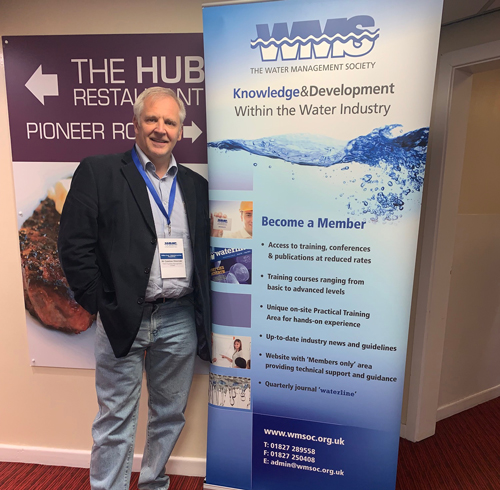
Tomek Olesinski – Senior Member of the Water Management Society
Tomek Olesinski, Director of TWO Facilities Management Ltd, has been awarded the title of ‘Senior Member’ of Water Management Society (January 2024).
The announcement from the Water Management Society Committee read:
“In recognition of this milestone the Society hereby awards you the new grade of “Senior Member”.
The certificate acknowledging this recognition will be sent to you once your membership renewal has been completed.
At that time your letter designation after your name will change to M.W.M.Soc (Snr).
Any Senior Member of the Society who, in the opinion of Council has made significant contributions to the activities of the Water Management Society and/or to the industrial/commercial application of water may be invited to accept the grade of Fellow. This award is deliberated by council and awarded at the AGM each year.”
Clinical Mobile Fleet – an assessor’s thoughts on how to approach a legionella risk assessment
Published by Waterline, Spring 2023, Water Management Society.
The Three Cs in Water Management – Hot and Cold Water Systems
Published by Waterline, Spring 2022, Water Management Society.
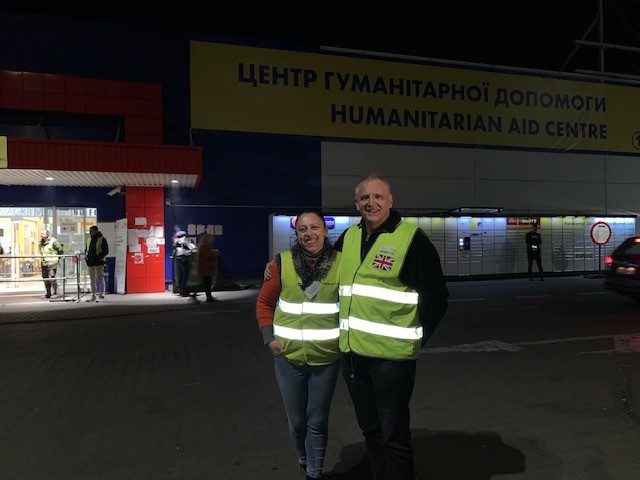
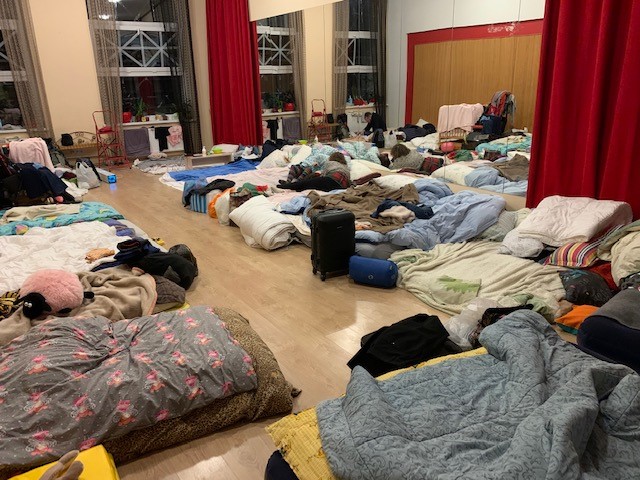
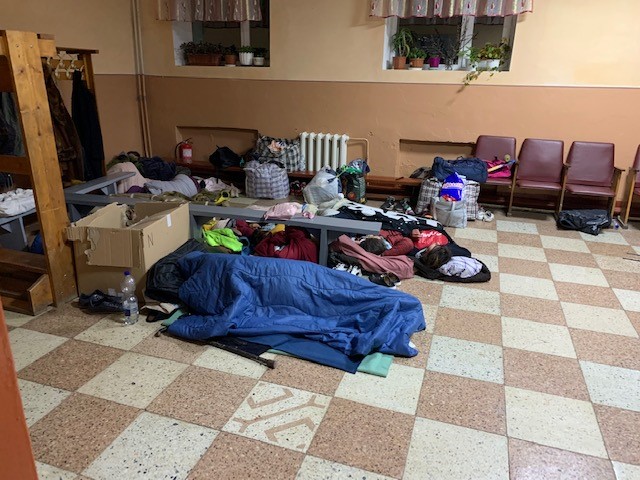
Humanitarian Trip to Ukraine and Poland March 2022
TWO FM Ltd, supported by generous individual sponsors from West Yorkshire, organised a humanitarian trip to deliver essential products to refugees from Ukraine.
On route to Poland, Tomek Olesinski was also generously given additional funds in Germany enabling him to purchase more essential baby food items which were greatly appreciated by the refugees.
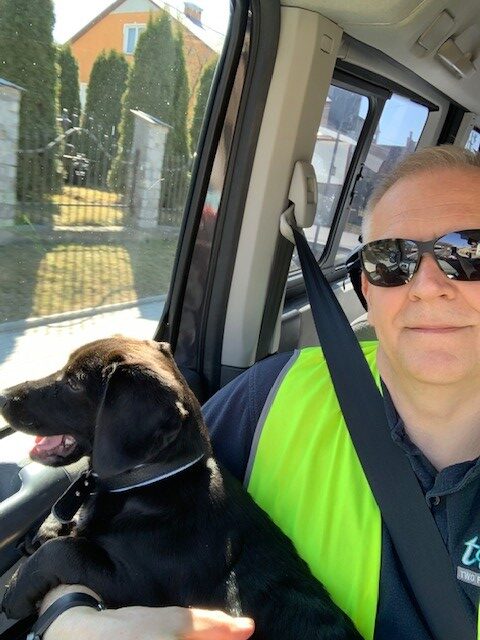
Tomek drove from Huddersfield to Przemysl in Poland and then joined forces with local volunteers to deliver goods into Ukraine.
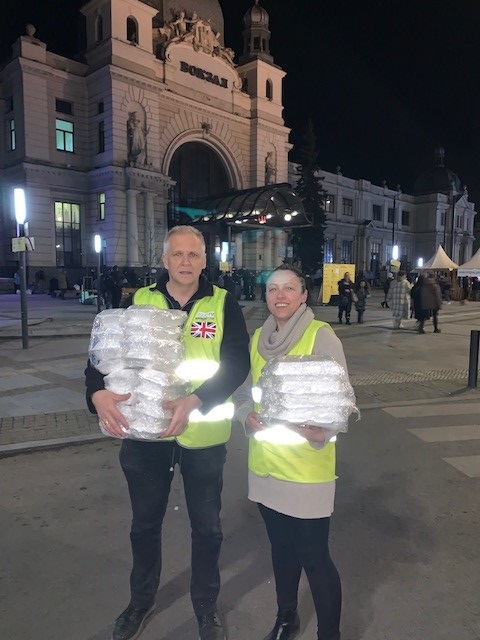
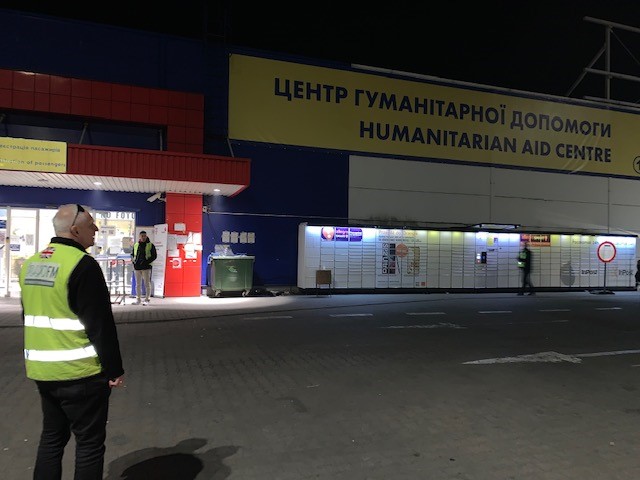
It was possible to supply hot meals, canned meat, thousands of sandwiches, hygiene products and, of course, Britain’s finest – chocolate – to a number of locations in Ukraine including Lviv.
During some of our trips we unfortunately encountered air raid alarms. It was a rather scary experience but we managed to drop off the planned help to civilians and Ukrainian military.
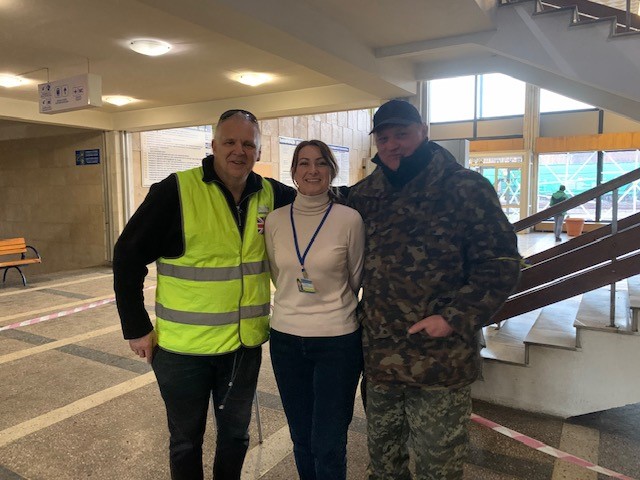
We also were able to provide transport for some refugees from Kyiv whom we safely brought across to Poland. There was also a small dog from Kyiv which we were happy to take with us to Poland. Below are some pics from Tomek’s humanitarian trip to Poland and Ukraine.





Strategic or reactive approach to water management (control of legionella) (by Tomek Olesinski, published in RAD Magazine February 2022)
Last September I attended a water industry conference in Manchester. It was very informative. One of the speakers asked the question: “Where did we go wrong?”
During his lecture it was evident that the question was an echo of his clients’ organisations which faced challenges due to either the lack of management systems being in place or an inadequate understanding of their responsibilities under current H&S water regulations, particularly when they faced the reality of a safety audit.
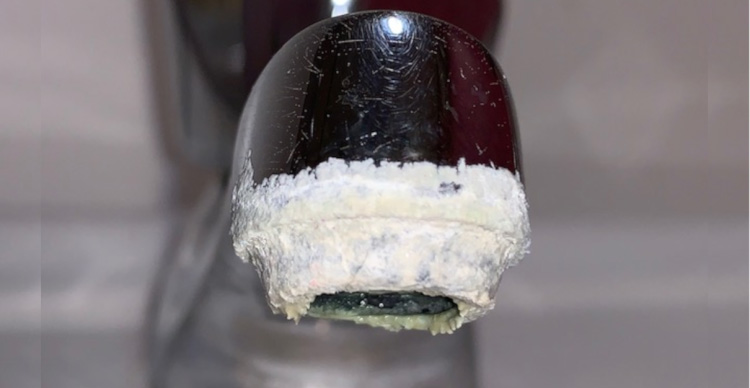
The speaker evidenced his point with photographs of various water systems’ components which had been clearly neglected as a result of a lack of planned maintenance.
His underlying theme was whether businesses should have been better prepared for the unexpected (in the context of water quality and water systems’ working condition). Where did the problem occur which ultimately landed said companies in what was thought to have been avoidable trouble?
His conclusion was simple – avoid a reactive approach and promote a planned system of works.
Unfortunately, it appears that we can find organisations that do not sign up to this kind of commercial understanding – the importance of H&S application across the board, including water systems and water quality.
The reasoning behind such an attitude may be highly complex.
In healthcare it is extremely important, dare I say, critical, that water quality be monitored and water installations be maintained according to planned service intervals. Not only at the moment when the inspector calls.
I would see this a being a strategic approach whose application begins from the conception/understanding of the risk issues through to key management hierarchy then down to the shop floor maintenance regime delivered by competent personnel.
When I hear the word ‘strategy’ or its variances, it always brings to my mind its original Greek meaning which is ‘general’ (like in the army). That means that whenever there is a strategy, there is a concept of ‘winning’ or ‘losing’ or being at ‘war’.
And we are indeed at ‘war’ when we want to achieve success (win) when dealing with potentially deadly bacteria like Legionella or Pseudomonas in water systems. These silent killers may strike anytime and anywhere, especially where the environment for their growth and multiplication is right.
All activities leading to achieving the highest water hygiene standards should be based on a pre-determined and continuous application of planned preventative maintenance tasks for specific applications. All supported by water industry guide notes and the Legionella Risk Assessment recommendations. Revision of these would form part of the overall program of works. This, in return, should help in phasing out culture of reactive works being the ‘norm’.
The application of planned works may identify parts of the water installation which need repairing or replacing before they fail (and thus potentially affect the water quality with proliferation of pathogenic matter).
Strategic (planned) maintenance programs aim to help assets to be sustained in a fit for purpose working condition and to minimise the risk of the pejorative effects of unplanned costs for reactive jobs e.g. materials and/or labour. Not to mention the down time, if that is required, to get this back to a proper and safe working condition.
I always compare a good and well-thought maintenance strategy with the foundation of a building. Once it is properly designed and constructed, the builders (competent may I add) could create a beautiful building – in our case – the maintenance plan translated into a safe water installation system.
TWO Facilities Management Limited has produced water management strategies, including bespoke policies and procedures, for both static and mobile clinical settings to ensure that its clients would have a well-constructed foundation in place.
Reactive work on the other hand (or fire-fighting as it is often described) can be the result of a lack of available resources, not all routine maintenance items having been properly identified or, if they were, the possible wrong advice being given on the timing and nature of the works required.
Another explanation might be that the upkeep program was insufficiently managed or managed with the wrong set of skills. The lack of continuous financial commitment on the part of senior management to progress with planned maintenance is commonly used to justify the interrupted, or on some occasions non-existent, upkeep of the water installation. The list of reasons might be longer.
Scanning through source materials on the outcomes of the lack of proper maintenance of water systems in healthcare settings always fills me with fear that it may happen anytime and anywhere, when and where the water systems are not part of any well thought through and scrutinised maintenance regime. The results could be serious if not fatal.
However, if we are willing to consider introducing a well-thought out strategic approach, we may never have to face the question ‘where did we go wrong?’
Lead picture: Lack of maintenance plan leads to poor cleanliness of water outlets.

Safe supply of water to mobile units should not be overlooked (by Tomek Olesinki, published in RAD Magazine September 2021)
In the climate of the COVID-19 pandemic, hand washing has been one of the key safety factors in fighting the virus. “But what about the water itself?” asked TWO Facilities Management director Tomek Olesinski. “In the clinical environment, and especially where the clinics can now be mobile, water quality plays an important role in the chain of clinical processes.” In mobile units delivering imaging or screening services there is usually a hand wash basin where hot and cold water is supplied from an external feed or from a cold water tank onboard the unit. There may also be a kitchenette, a toilet or a shower.
Regular monitoring of the water quality gives crucial data on possible changes in water quality. “If this is the case, the remedial actions stemming from HTM 04-01 regulations for healthcare environments will be very helpful,” stated Olesinski. “I am happy to assist our clients in making sure that the water systems in their mobile clinics are checked, tested and – when considered necessary – cleaned.”
As a provider of support consultancy services in the area of facilities management, TWO FM works on different diagnostic modalities to ensure that statutory water management tasks are in place to comply with relevant health and safety guide notes covering water hygiene. The company is a member of the Legionella Control Association.
Water supplied to mobile clinical units may come from various sources depending on where they are located and for how long. When the units are not being clinically used, water stored in a tank can stagnate if no suitable maintenance processes are in place to reduce the risk of deterioration of its quality.
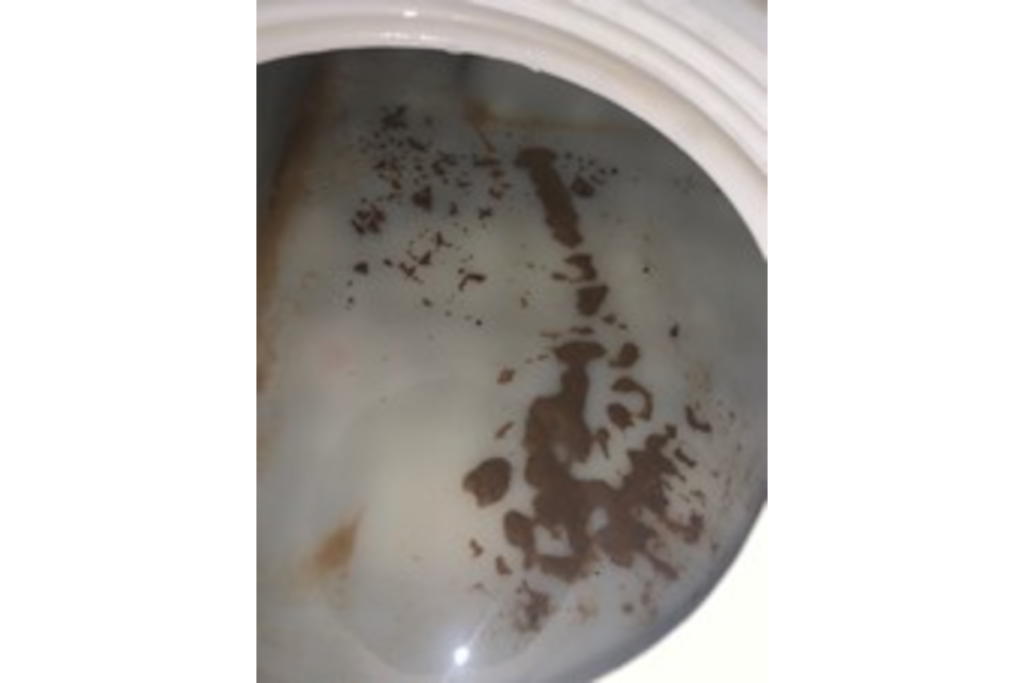
Similarly, water installation components such as pipework, taps with thermostatic mixer valves, strainers and expansion vessels for hot water heaters should be included in the maintenance regime. This can ensure that potential risks stemming from the impurities that can be found in water installation are managed.
“It is easy to get used to a ‘normal’ colour of water coming from a tap, not knowing if it is biologically safe,” added Olesinski. “I refer here to well-known aquatic pathogenic organisms that can be found in water like Legionella, Pseudomonas or even E-coli.
“The presence of these bacteria is not reserved to what we would understand to be the ‘usual environments’ such as water systems in buildings or swimming baths, cooling systems etc; they may be also found on clinical mobiles. This has been my professional experience when dealing with both hot and cold water installations on hundreds of such units.”